
Why Patients Forget Discharge Instructions—and How Clinics Can Fix It
Learn why patients often forget discharge instructions and discover practical ways to improve follow-up communication, reduce repeat phone calls, and create a better patient experience.
See how you can use Care Agent to reduce staff burden, keep patients informed, and bring predictability to your operations
Get StartedA patient leaves your office feeling confident.
They've had a good appointment. They understand what happened. They thank thecare team and head home.
Then the phone rings.
If this sounds familiar, you're not alone.
Discharge instructions are one of the most important parts of the patient journey, but they're also one of the easiest things for patients to forget.
The reason isn't that patients aren't listening. They're often trying to absorba lot of information at once—sometimes while they're anxious, in pain,distracted, or simply eager to get home.
When healthcare organizations make discharge instructions easier to access,understand, and revisit, everyone benefits.
Why Discharge Instructions Are So Easy to Forget
Patients may receive medication instructions, activity restrictions, follow-up recommendations, billing information, referral details, and warning signs—all in the final minutes of a visit.
People naturally forget a large portion of new information shortly afterhearing it. Patients don't need more information—they need information that'savailable when they need it.
Care Agent Tip: Discharge isn't the end of the visit. It's the beginning ofeverything the patient does next.
1. Keep Instructions Clear and Simple
Use plain language instead of medical jargon. Break instructions into easy to follow steps:
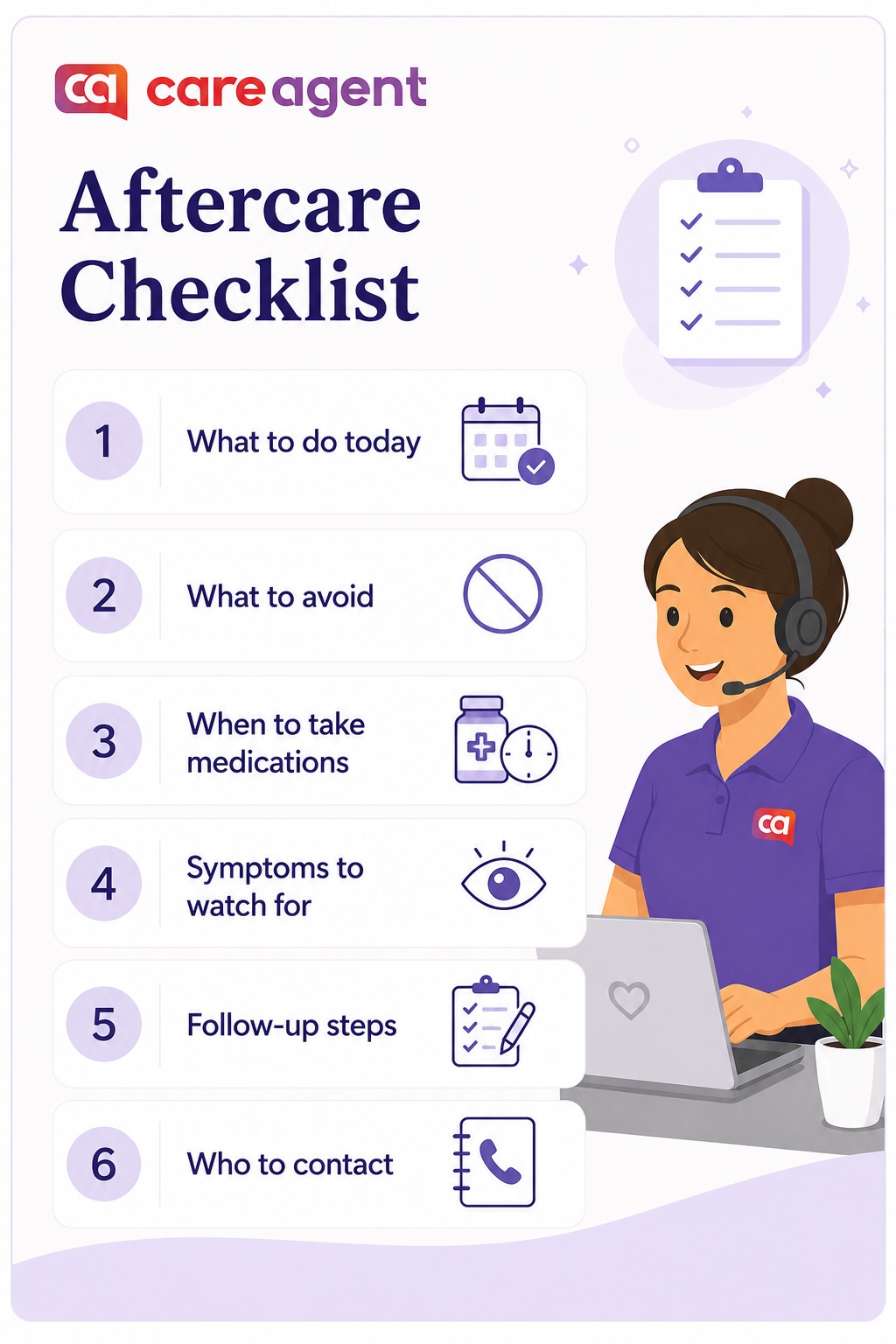
Takeaway: If patients have to reread a sentence several times, it's probably too complicated.
2. Give Patients Digital Access to Their Instructions
Paper instructions can be misplaced. Digital instructions delivered through secure SMS text messaging or a patient portal are easier to revisit when questions arise.
Takeaway: Information patients can easily revisit is information they're morelikely to follow.
3. Reinforce Important Information After the Visit
Follow-up messages can remind patients to take medications, schedule appointments, complete testing, monitor symptoms, and contact the practice if needed.
Takeaway: Reinforce key instructions after patients have had time to process their visit.
4. Make It Easy to Ask Questions
Patients should know exactly how to reach your team and when they should contact you. Clear expectations reduce uncertainty while supporting better care.
Takeaway: Confidence grows when patients know help is available.
5. Think Beyond the Appointment
Discharge is part of a larger care journey. Ongoing communication helps patients stay informed, follow care plans, and remain engaged.
Takeaway: Consistent communication after the visit builds trust.
Better Communication Leads to Better Outcomes
Improving discharge communication doesn't require overwhelming patients with more information. It requires delivering the right information at the right time in a format that's easy to understand and access.
Better communication leads to fewer repeat questions, more confident patients,and a smoother experience for everyone.
A Quick Discharge Communication Checklist
□ Are discharge instructions written in plain language?
□ Can patients easily access instructions after leaving?
□ Have next steps been clearly outlined?
□ Do patients know who to contact with questions?
□ Are reminders reinforced after the visit?
□ Does communication continue beyond discharge?
Communication Doesn't End at the Door
Thepatient journey continues long after the appointment ends. At Care Agent, we believe discharge is more than paperwork. By automating follow-up communication, sharing digital discharge instructions, and keeping patients informed after they leave, healthcare organizations can reduce administrative burden while improving the overall patient experience.Ready to improve communication after every visit? Discover how Care Agent helps healthcare organizations deliver digital discharge instructions and support patients beyond the appointment.
Request a Demo
See how you can use Care Agent to reduce staff burden, keep patients informed, and bring predictability to your operations