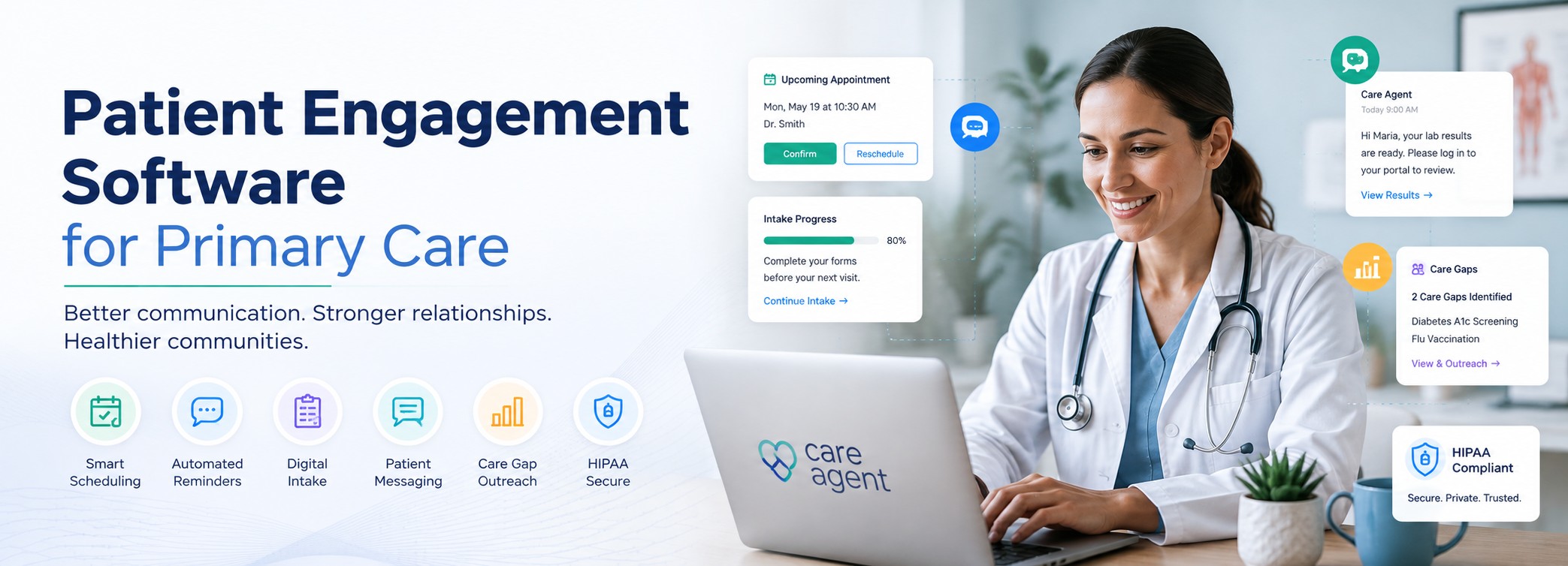
Top Patient Engagement Software for Primary Care in 2026
Discover how the right Patient Engagement Software for Primary Care can enhance communication, improve patient experience, and streamline workflows while supporting both small practices and large groups with digital tools for better healthcare outcomes.
Discover if Care Agent is right for your practice
Get StartedPrimary care practices need patient engagement software that makes communication easier, closes care gaps, and supports a better experience before, during, and after each visit. The right platform can help teams manage reminders, intake, education, follow-up, and ongoing outreach without adding unnecessary manual work. For U.S. primary care decision-makers, the best choice is not simply the flashiest tool; it is the one that fits your workflows, patient population, compliance expectations, and staffing model.
What should primary care teams compare first?
Primary care teams should compare patient engagement software by how well it improves access, communication, care coordination, and administrative efficiency in daily practice. A strong platform should help patients take the next step, whether that means scheduling a visit, completing forms, responding to a reminder, reviewing care instructions, or staying connected between appointments. It should also be practical for front-desk staff, medical assistants, clinicians, and care managers who already work under time pressure.
Use these comparison criteria before shortlisting any healthcare engagement solutions:
- Integration fit: Does it connect with your EHR, scheduling, billing, portal, telehealth, or care management tools?
- Patient reach: Does it support SMS, email, voice, portal messaging, and multilingual communication where needed?
- Workflow impact: Does it reduce manual outreach, or does it create another inbox for staff to manage?
- Security and compliance: Does the vendor support HIPAA-aligned workflows, access controls, auditability, and appropriate data handling?
- Usability: Can patients use it easily on a mobile device without complex logins for every interaction?
- Reporting: Can leaders track engagement, missed appointments, campaign performance, and care gap outreach?
- Scalability: Can it support one clinic today and multiple locations, care teams, or service lines later?
- Support model: Does the vendor provide onboarding, training, workflow configuration, and responsive support?
1. Digital front door tools simplify access
A digital front door helps patients begin interacting with your practice online instead of relying only on phone calls. For primary care, this often includes online scheduling, appointment requests, location details, provider availability, digital intake, insurance capture, and basic service navigation. When designed well, it gives patients a clearer path to care and gives staff fewer routine calls to triage.
This category of digital patient engagement is especially important for practices competing with retail clinics, urgent care centers, and large health systems. Patients increasingly expect basic tasks to be fast, mobile-friendly, and available outside office hours. A strong digital front door does not replace human support; it helps reserve staff time for situations that truly need personal attention.
When comparing tools, look for:
- Clear scheduling or request workflows
- Mobile-friendly forms and instructions
- Consistent branding across patient touchpoints
- Options for new and established patients
- Configurable routing for different visit types
2. Appointment reminder systems reduce avoidable friction
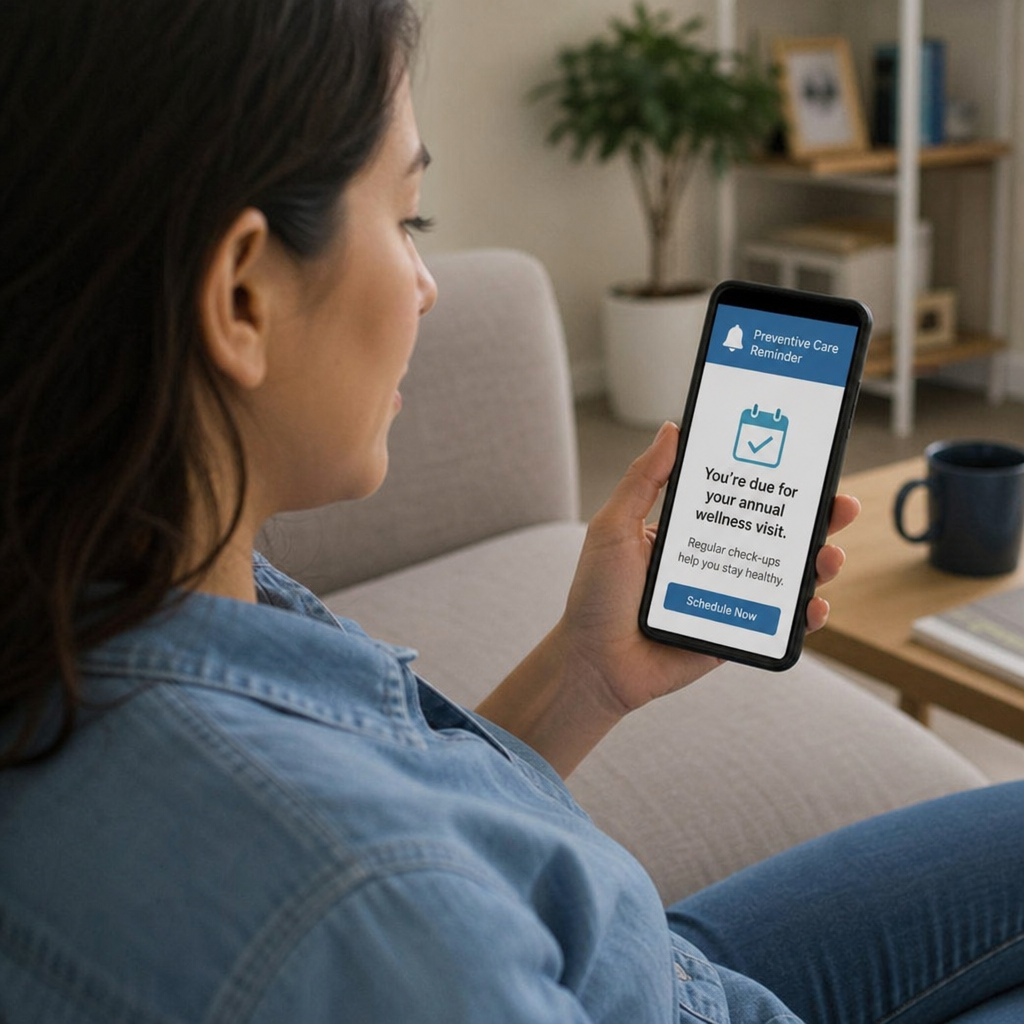
Appointment reminders are among the most practical patient engagement tools for primary care. They help patients remember upcoming visits, confirm attendance, reschedule when needed, and understand what to bring. For staff, automated reminders can reduce repetitive outreach and make the day’s schedule easier to manage.
The strongest reminder workflows go beyond a single generic message. They can be tailored by visit type, communication preference, timing, and patient need. For example, a preventive visit may require different instructions than a chronic care follow-up or a lab review appointment.
Primary care leaders should compare reminder systems by whether they support two-way responses, easy rescheduling prompts, language preferences, and reporting on confirmations or cancellations. A reminder system is most valuable when it helps the practice act on responses, not just send notifications.
3. Digital intake and registration tools speed up the visit
Digital intake tools allow patients to complete demographic updates, insurance details, medical history, consent forms, and screening questions before the appointment. This can improve the patient experience by reducing clipboard time in the waiting room. It can also help staff identify missing information earlier in the workflow.
For primary care groups, digital intake is useful because visits often involve multiple layers of information: preventive screenings, medication updates, chronic condition status, social needs, and care preferences. If the tool can present the right forms for the right visit, it can support more organized encounters.
When evaluating patient experience software for intake, ask whether the forms are easy to configure, whether completed data can be reviewed efficiently, and whether staff can manage exceptions. The goal is not to collect more information for its own sake. The goal is to collect the right information at the right time, then make it usable for the care team.
4. Two-way patient communication software keeps conversations moving
Patient communication software helps practices move routine conversations out of phone tag. Secure messaging, SMS workflows, automated prompts, and response routing can help patients ask questions, confirm details, and receive next-step instructions. For primary care, this can support everything from medication refill reminders to follow-up after abnormal results, depending on the practice’s policies and system configuration.
The key is to avoid creating communication chaos. A tool should help staff sort, prioritize, route, and document interactions. If every message lands in the wrong queue, engagement can quickly become a burden.
Compare platforms by how they handle:
- Two-way texting and secure message escalation
- Staff assignment and routing rules
- Message templates for common workflows
- Documentation or EHR synchronization options
- Consent and opt-out management
- Patient language and accessibility needs
This is where patient interaction tools need to be both patient-friendly and operations-friendly. Patients want quick answers; teams need safe, trackable workflows.
5. Care gap outreach supports preventive and chronic care
Care gap outreach tools help primary care teams identify and contact patients who may be due for services such as wellness visits, screenings, immunizations, labs, medication follow-ups, or chronic condition check-ins. The specific outreach should be based on the practice’s clinical protocols, payer programs, and available data. The software should make these efforts easier to manage without overstating what automation can accomplish.
This type of patient engagement software can be valuable for value-based care, quality programs, and population health work. It can segment patients, send reminders, prompt scheduling, and help staff follow up with people who do not respond. However, data quality matters. If EHR fields, eligibility information, or care gap logic are incomplete, outreach may be less accurate.
Decision-makers should look for flexible campaign rules, clear patient lists, reporting, and practical exception handling. The best workflow lets staff review what is being sent, understand why a patient is included, and adjust outreach when clinical judgment is needed.
6. Patient education tools make instructions easier to act on
Patient education is most effective when it is timely, relevant, and easy to understand. Engagement platforms can deliver education after a diagnosis, before a procedure, following a medication change, or between chronic care visits. For primary care, education may cover lifestyle guidance, preventive care, condition basics, medication adherence, or when to seek urgent help.
The value comes from matching content to the patient’s situation. A long handout buried in a portal is less useful than a clear message that arrives when the patient needs it. Some healthcare software solutions also allow care teams to send approved resources directly after a visit, helping reinforce what was discussed in the exam room.
When comparing education features, review content governance, reading level, language availability, branding, and whether the practice can choose or approve materials. Avoid tools that make unsupported clinical claims or send content that your clinicians would not stand behind.
7. AI-enabled engagement can assist, but governance matters
AI patient engagement software solutions 2026 became a common search phrase because many practices are exploring automation, conversational tools, and smarter outreach. In primary care, AI-enabled features may help draft messages, triage routine requests, suggest next actions, personalize outreach timing, or summarize patient interactions. These capabilities can be useful, but they should be deployed carefully.
The best AI patient engagement software 2026 for one practice may not be the right fit for another. Primary care leaders should avoid judging AI tools only by novelty. Instead, evaluate whether the tool has human oversight options, clear escalation rules, transparent configuration, privacy protections, and a realistic role in the workflow.
Before adopting AI features, ask:
- What tasks will the AI perform, and what tasks remain human-led?
- How are messages reviewed before they reach patients?
- How does the platform handle urgent or clinically sensitive language?
- What data is used, stored, or shared?
- Can the practice audit conversations and outcomes?
- How does the vendor support compliance and staff training?
AI should reduce friction, not introduce unmanaged risk. Treat it as a workflow assistant, not a replacement for clinical judgment.
8. Telehealth and remote follow-up tools extend access
Telehealth remains an important part of primary care access, especially for medication reviews, behavioral health touchpoints, chronic care follow-ups, and visits where a physical exam is not the central requirement. Engagement software can support telehealth by sending links, reminders, instructions, pre-visit forms, and post-visit follow-up messages.
Remote follow-up tools also help practices stay connected after the visit. A patient may need to report symptoms, confirm a medication change, complete a home reading, or schedule a related service. When these workflows are structured, patients are less likely to feel left on their own.
Compare telehealth-related engagement features by ease of use, device compatibility, instructions for patients, documentation support, and integration with scheduling. The smoother the workflow, the less time staff spend troubleshooting access issues.
9. Feedback and patient experience tools reveal service gaps
Feedback tools help primary care practices understand what patients experience across scheduling, check-in, visits, billing, follow-up, and communication. Surveys, review prompts, satisfaction measures, and comment analysis can reveal recurring issues that leaders might not see from operational data alone. The goal is not just to collect ratings; it is to identify fixable problems.
Patient experience software should make it easy to ask focused questions at appropriate points in the journey. Short, timely surveys often generate more useful feedback than long forms sent weeks later. Practices can use themes from feedback to improve phone workflows, instructions, wait-time communication, digital access, or staff training.
When comparing tools, consider survey customization, reporting clarity, response routing, review management features, and how negative feedback is handled internally. A useful system helps teams respond constructively rather than simply monitor scores.
10. Analytics and reporting turn engagement into management insight
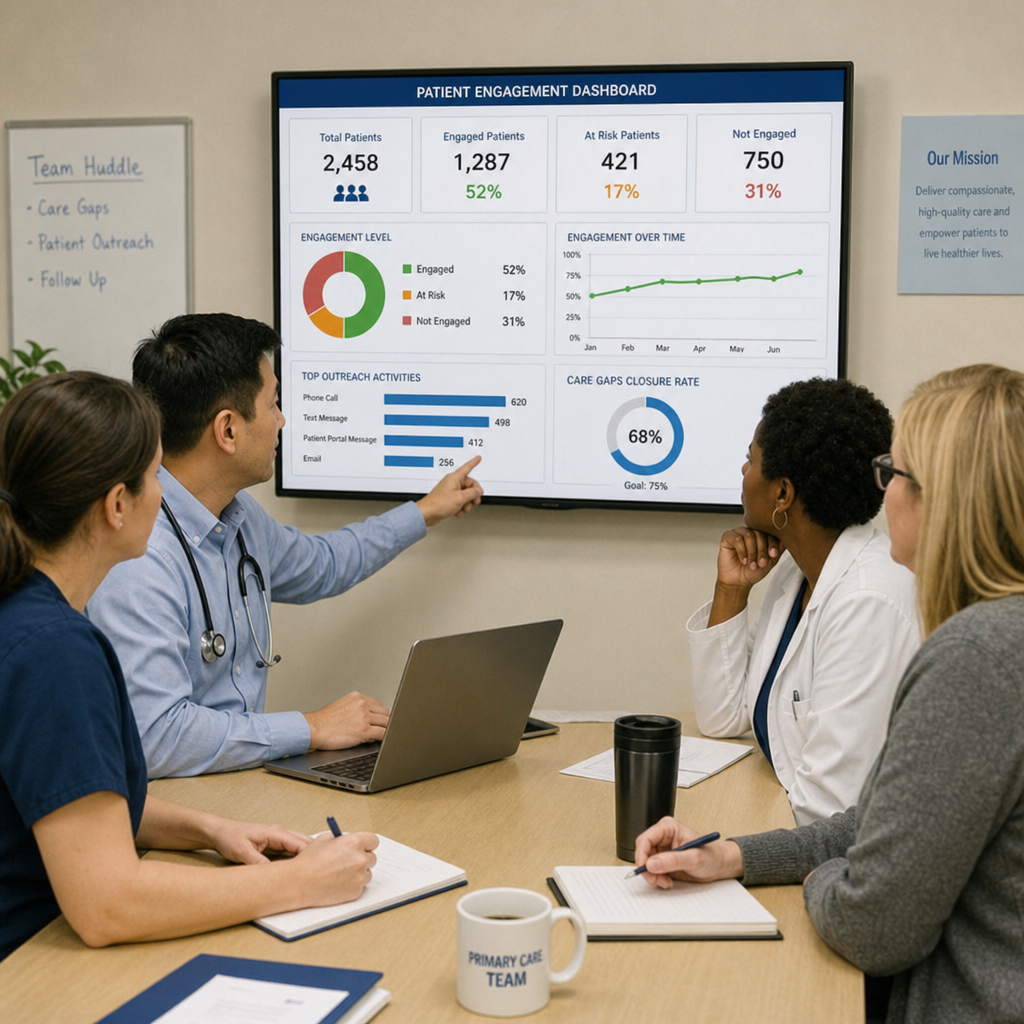
Patient engagement software should give leaders visibility into what is working. Reporting may include reminder response rates, outreach campaign results, appointment confirmations, form completion, message volume, response times, and care gap progress. These insights help practices decide where to adjust staffing, templates, timing, and workflows.
For U.S. primary care organizations, reporting is also important because many teams balance fee-for-service operations with quality measures, payer requirements, and value-based care initiatives. Engagement data can support better operational decisions, but only if it is understandable and trusted by users.
Look for dashboards that answer practical questions: Which reminders lead to action? Which outreach campaigns need staff follow-up? Where are patients dropping off? Which locations or teams need workflow support? A clean reporting experience is often more useful than a complicated analytics module no one has time to interpret.
How should you choose the right platform?
Start by choosing the patient engagement software that solves your highest-friction workflow first, then expand from there. A small practice may begin with reminders and digital intake. A larger primary care group may need broader healthcare engagement solutions that include outreach, messaging, reporting, and AI-enabled support.
Use this shortlist checklist during demos:
- Map the exact workflows you want to improve.
- Ask vendors to show those workflows live, not only slides.
- Confirm how the platform integrates with your current systems.
- Review patient consent, privacy, and security controls.
- Include front-desk, clinical, billing, and leadership users in evaluation.
- Test the patient experience on a mobile device.
- Ask how implementation, training, and support are handled.
- Define success measures before launch.
A good platform should make care easier to access, communication easier to manage, and follow-up easier to sustain. For primary care decision-makers, the right choice is the solution that fits real clinic operations while helping patients stay informed, prepared, and connected.
Request a Demo
See how you can use Care Agent to reduce staff burden, keep patients informed, and bring predictability to your operations