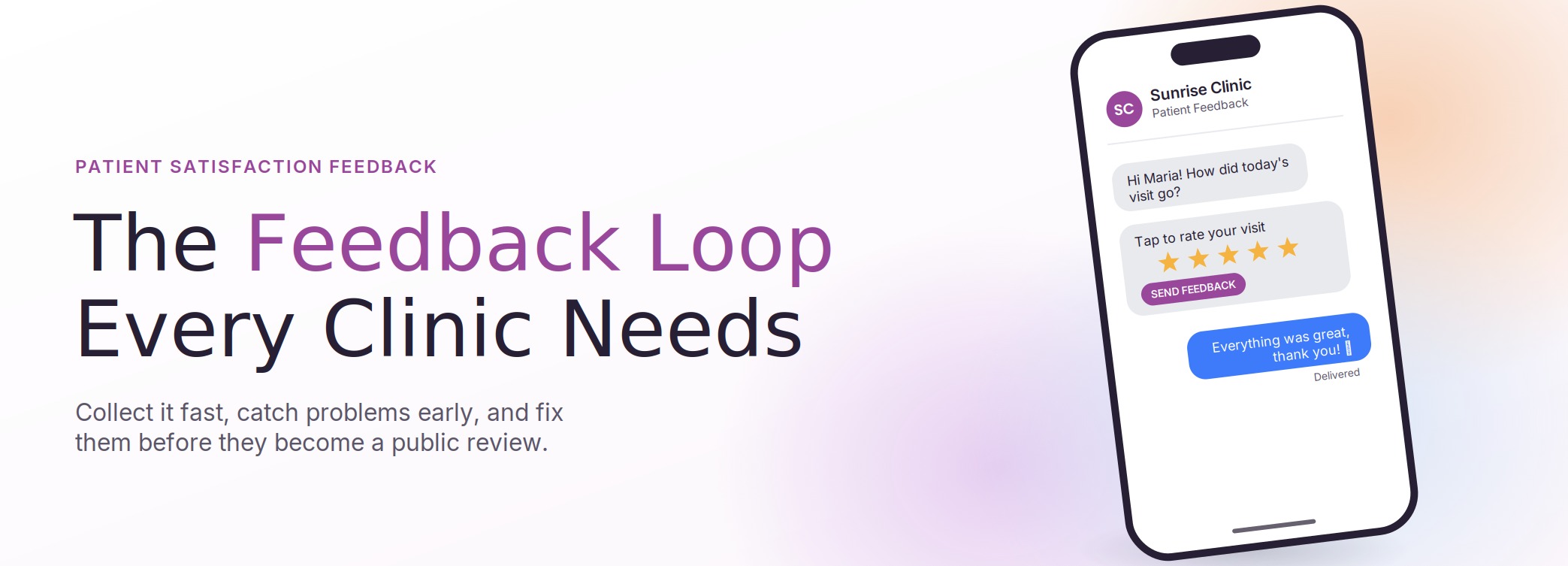
The Simple Patient Feedback Loop Every Clinic Should Have
Learn how a simple patient satisfaction feedback loop helps clinics identify issues earlier, improve patient experiences, and drive continuous operational improvement.
See how Care Agent turns feedback into clinic improvement.
Get StartedHealthcare leaders know patient feedback matters. The challenge isn't deciding whether to collect it—it's collecting the right feedback at the right time and actually using it to improve the patient experience.
Too often, feedback lives in disconnected places. Some patients leave a Google review. Others mention concerns during a follow-up call. Staff hear complaints at the front desk, but those insights never make it into a report. By the time leadership recognizes a pattern, weeks—or even months—have passed.
That's not a feedback strategy. It's damage control.
The most successful clinics create a simple patient feedback loop that continuously captures, analyzes, and acts on patient satisfaction feedback. Instead of reacting to negative reviews after they've been posted publicly, they identify issues earlier, resolve concerns faster, and continually improve the patient experience.
Why patient satisfaction feedback often falls short
Most healthcare organizations aren't ignoring feedback. They're simply collecting it in ways that make improvement difficult.
Common problems include:
• Surveys sent days or weeks after a visit
• Low response rates
• Feedback collected in multiple systems
• No consistent process for reviewing comments
• No ownership for acting on insights
• Patients leaving public reviews before the clinic knows there's a problem
What is a patient feedback loop?
A patient feedback loop is a repeatable process that turns patient experiences into operational improvements:
1. Collect feedback quickly after the visit.
2. Identify trends and individual concerns.
3. Take action to resolve issues and improve workflows.
4. Measure whether those changes improve future patient experiences.
Step 1: Ask for feedback while the experience is still fresh
Timing matters. Asking shortly after the visit improves participation and captures more accurate patient satisfaction feedback while creating opportunities to resolve concerns before they become public reviews.
Step 2: Make feedback easy to give
Patients are busy. Mobile-friendly, simple surveys reduce friction and encourage participation. Care Agent supports secure patient communication throughout the care journey while integrating with existing healthcare workflows.
Step 3: Look for patterns, not just individual complaints
Individual comments are helpful, but trends reveal operational issues. Review feedback regularly to identify recurring concerns around wait times, registration, discharge instructions, billing, or communication.
Step 4: Close the loop internally
Assign ownership for reviewing feedback, prioritize improvements, and measure the results. Small operational improvements compound into better patient experiences.
Step 5: Address concerns before they become public reviews
Request feedback soon after visits so dissatisfied patients have an opportunity to share concerns directly. Early intervention helps clinics resolve issues before they affect online reputation.
Feedback should improve operations—not create more work
Patient feedback should become part of existing workflows rather than another manual task. Automation helps staff focus on improvements instead of administration.
The business value of better patient satisfaction feedback
Consistent feedback helps improve patient retention, strengthen online reputation, identify operational bottlenecks, support staff coaching, and improve communication.
Build a feedback process that never stops improving
Every patient interaction is an opportunity to learn. Clinics that consistently collect, review, and act on patient satisfaction feedback create better experiences and stronger patient relationships.
Request a Demo
See how you can use Care Agent to reduce staff burden, keep patients informed, and bring predictability to your operations