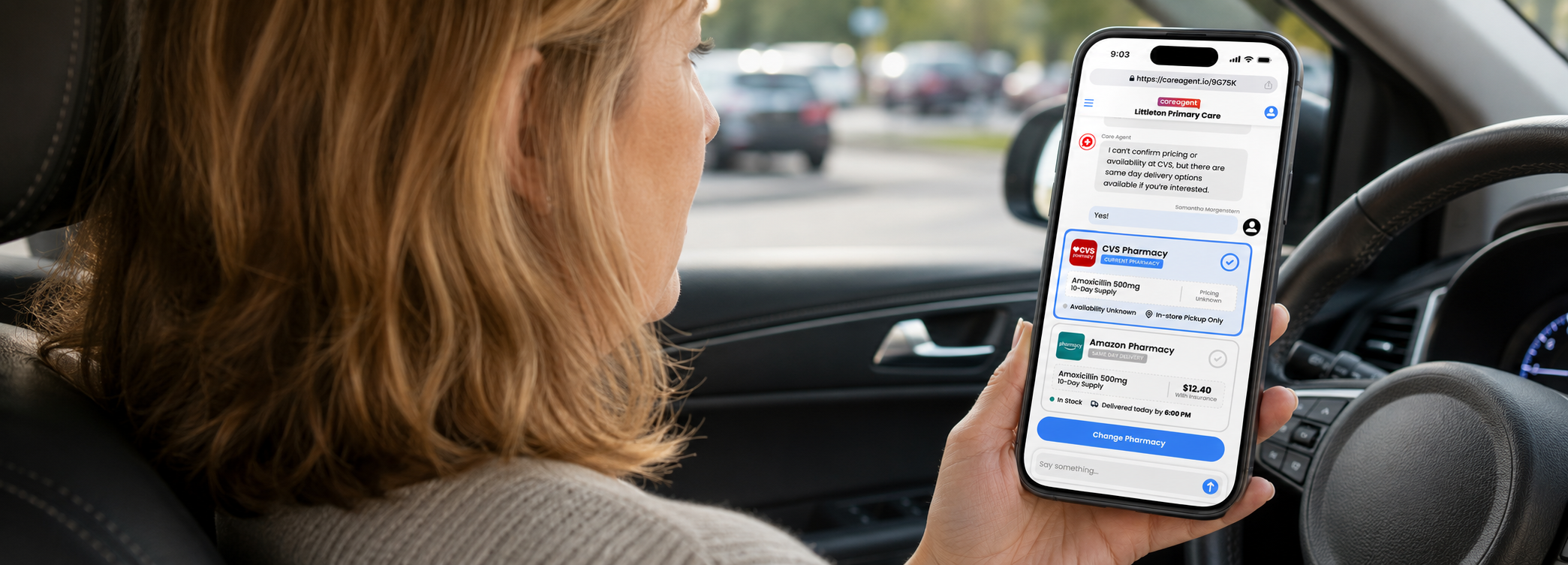
Share Lab Results Without Creating More Phone Calls
Discover how modern practices automate secure lab result communication while reducing administrative work.
See how Care Agent helps automate patient communication across the care journey—from scheduling and intake through lab results and follow-up. Request a personalized demonstration to learn more.
Get StartedThe Hidden Cost of 'Your Results Are Ready'
It's 10:30 on a Tuesday morning. The waiting room is full, providers are seeing patients, and the front desk has already answered dozens of calls. Mixed into appointment scheduling, insurance questions, and prescription requests is another category of work that quietly consumes hours every week: communicating lab results. Most practices know the routine—results arrive, someone calls the patient, leaves a voicemail, documents the attempt, and repeats the process later. None of this work is clinically difficult, but it is operationally expensive. Every missed connection creates another task, another interruption, and another opportunity for patient frustration.
Patients today expect timely communication. When they don't hear from their practice, they often call. Those inbound calls create even more work, turning a simple notification into multiple conversations spread across several days.
Why Phone Calls Don't Scale
Phone calls have long been the standard, but they no longer align with how people communicate. Patients screen unknown numbers, work during office hours, and often prefer digital interactions. Staff, meanwhile, lose productivity every time they stop to dial a number, leave a message, document an attempt, or answer the same questions repeatedly. Context switching adds up quickly.
The Patient Experience Has Changed
Patients don't necessarily expect every result immediately. They do expect transparency. They want to know when results are available, understand whether action is required, and know what happens next. Patient portals help but are not enough on their own because many patients rarely log in or don't realize new information is waiting.
Where Practices Lose Time
Manual workflows generate repeated outbound calls, inbound' checking on my results' calls, voicemail tag, documentation, delayed follow-up appointments, and unnecessary interruptions. None of these activities improve clinical care; they simply compensate for inefficient communication.
A Better Workflow
Modern patient engagement platforms automate routine communication while keeping appropriate safeguards in place. Patients receive notifications when information is ready, authenticate through a secure experience, review available documents, and understand the next step. Staff stay involved when clinical conversations require personal interaction, but routine notifications no longer depend on repeated phone calls.
Benefits Beyond Fewer Calls
Reducing phone calls is only one outcome. Practices also create a more consistent patient experience, reduce front-desk interruptions, improve follow-up consistency, and allow employees to focus on higher-value work. Patients appreciate timely updates while providers spend less time answering administrative questions.
Building Trust
Waiting for results creates anxiety. Clear communication reassures patients that their care continues after they leave the office. Practices that proactively communicate often build stronger relationships because patients feel informed rather than forgotten.
How Care Agent Helps
Care Agent helps healthcare organizations streamline communication across the patient journey. The platform supports secure patient engagement from scheduling and intake through follow-up, including digital delivery of lab results and related communications. It integrates with existing workflows and helps reduce repetitive administrative work while maintaining each clinic's brand experience.
FAQ
Q: Does automation replace staff?
A: No. It removes repetitive communication so staff can focus on patients needing personal attention.
Q: What if results require provider discussion?
A: Automated workflows can direct patients to the appropriate next step while providers personally handle clinically significant conversations.
Q: Can this reduce phone volume?
A: Routine status inquiries and repeated callback attempts can be significantly reduced when patients receive proactive updates.
Conclusion
Every lab result is an opportunity to improve the patient experience instead of creating another round of phone tag. Practices that modernize communication reduce administrative burden while making patients feel informed and connected. As expectations continue to evolve, simple, proactive communication becomes a competitive advantage—not just an operational improvement.
Request a Demo
See how you can use Care Agent to reduce staff burden, keep patients informed, and bring predictability to your operations