Enhancing Healthcare with Patient Engagement Software
Transform healthcare with patient engagement software, enhancing communication, efficiency, and patient satisfaction through digital tools and platforms.
See how you can use Care Agent to reduce staff burden, keep patients informed, and bring predictability to your operations
Get StartedIn today's fast-paced healthcare environment, patient engagement software is transforming how care is delivered. This technology bridges the gap between patients and providers, enhancing communication and collaboration.
Digital patient engagement tools empower patients to take an active role in their health. They streamline processes like appointment scheduling and follow-ups, making healthcare more efficient.
Healthcare software solutions reduce administrative burdens, allowing providers to focus on patient care. These tools also improve patient satisfaction by offering personalized experiences and timely information.
Patient engagement platforms are essential for modern healthcare organizations. They support better health outcomes and foster stronger patient-provider relationships.
As the healthcare industry evolves, adopting patient engagement software is crucial for delivering high-quality, patient-centered care.
What is Patient Engagement Software?
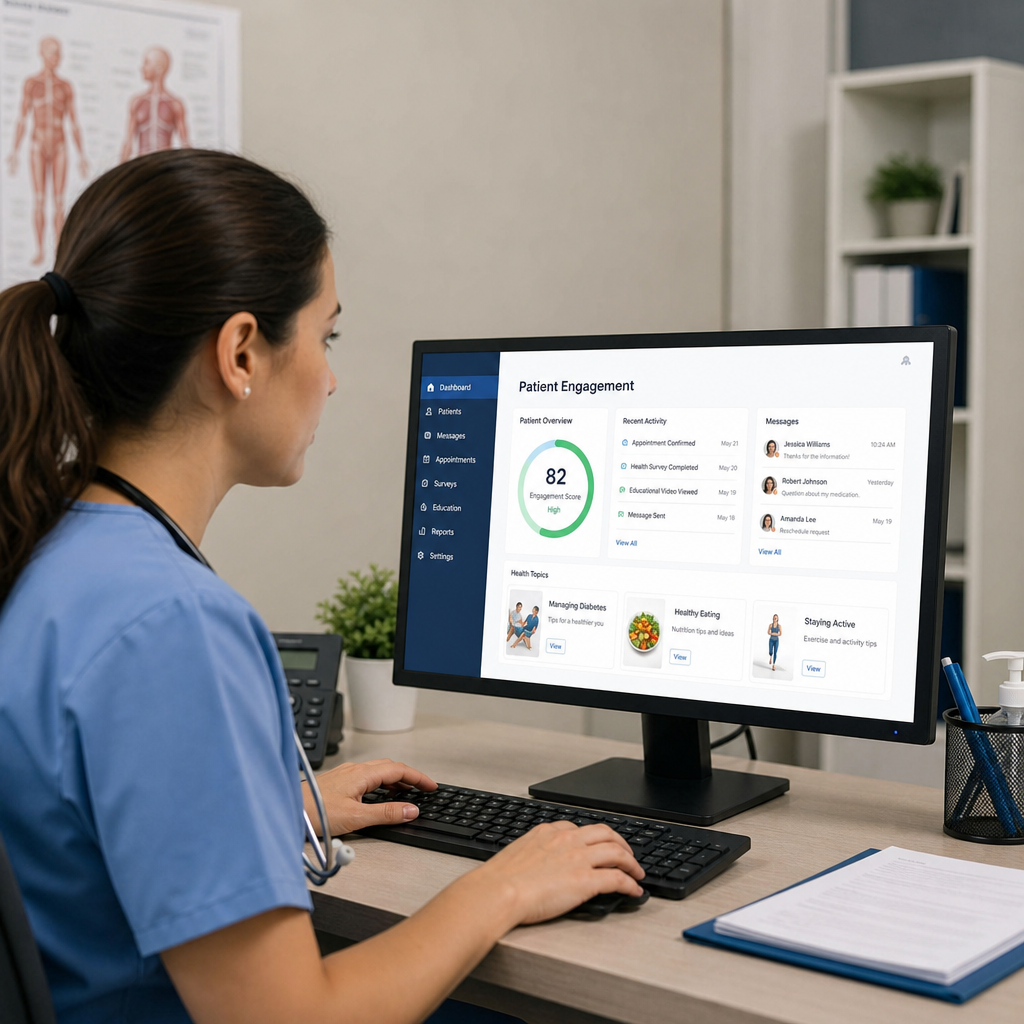
Patient engagement software is a set of digital tools designed to enhance interaction between healthcare providers and patients. This software fosters active participation in the care process, ensuring patients are involved in decisions about their health.
These digital tools come equipped with features that simplify patient engagement. They include secure messaging, appointment scheduling, educational resources, and telehealth services. These functionalities empower patients to manage their health with greater independence.
Additionally, patient engagement platforms often integrate with electronic health records (EHRs). This integration allows seamless access to crucial patient information, ensuring accurate and up-to-date records.
Healthcare providers use patient engagement platforms to improve patient experience and outcomes. By utilizing these tools, they can offer personalized care and build trust with patients. These patient experience software solutions are essential in modern healthcare, enhancing the quality and efficiency of care delivery.
Key Features of Patient Engagement Tools
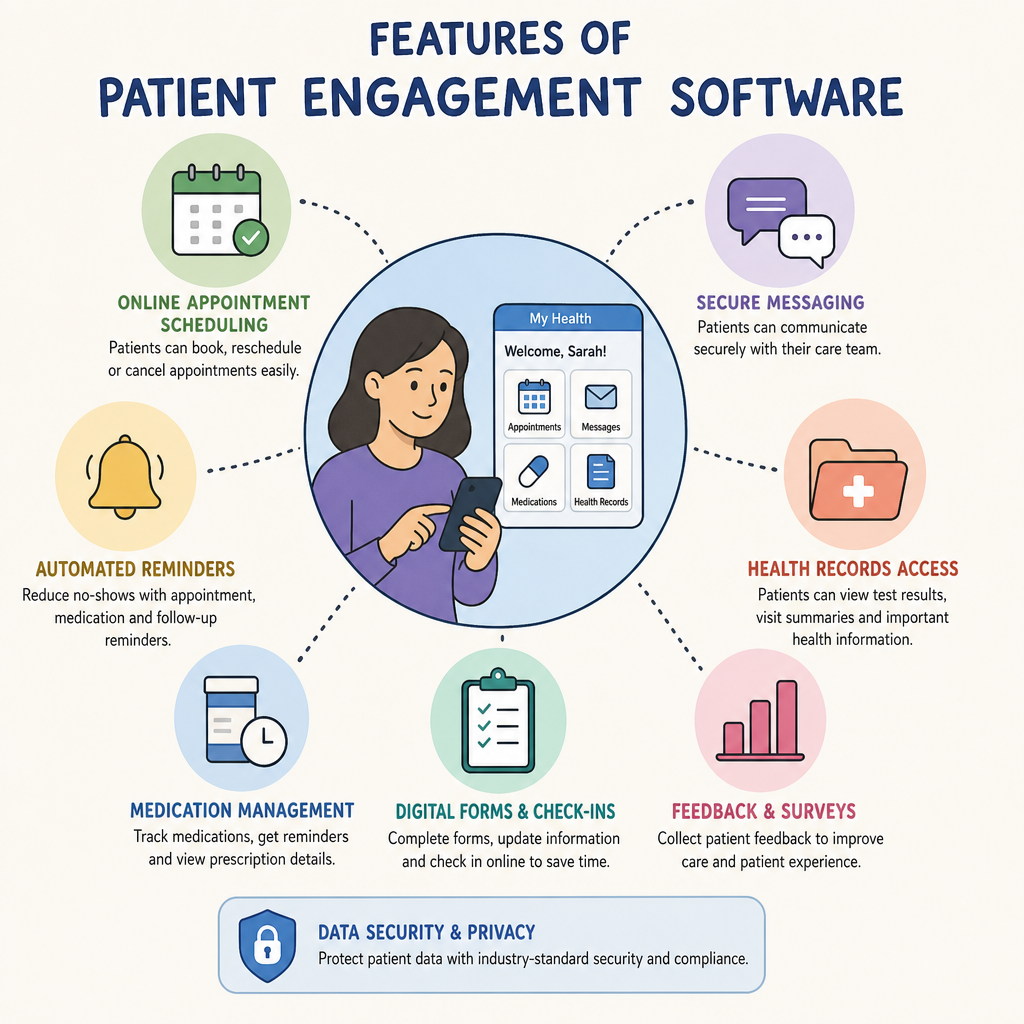
Patient engagement tools offer numerous features that improve healthcare interactions. These tools streamline various processes for both patients and providers, making healthcare more accessible and efficient.
One of the standout features is secure messaging. This allows patients to communicate directly with their healthcare providers without needing to visit the clinic. Through secure platforms, patients can ask questions and receive timely responses.
Telehealth allows patients to meet with providers virtually, reducing the need for in-person visits. This is especially helpful for patients with mobility challenges or those who live far from healthcare facilities.
Additionally, educational resources provided by engagement platforms empower patients with knowledge about their conditions. These resources include articles, videos, and interactive tools tailored to individual needs.
Here's a list of essential features:
- Appointment scheduling and reminders
- Secure messaging and communication
- Telehealth and virtual consultations
- Educational resources and patient portals
- Integration with electronic health records (EHRs)
Patient engagement tools also support appointment scheduling and reminders, reducing no-show rates. Patients receive reminders via email, SMS, or app notifications, ensuring they stay informed about upcoming visits.
Benefits of Digital Patient Engagement for Healthcare Providers
Digital patient engagement offers several advantages for healthcare providers. It enhances efficiency and reduces administrative burdens significantly. By automating routine tasks, staff can focus on patient care more effectively.
One significant benefit is improved patient outcomes. When patients actively engage in their healthcare, they are more likely to adhere to treatment plans. This leads to better health results and fewer hospital visits.
Reduced no-show rates are another critical benefit. Automated reminders help patients remember appointments, ensuring better use of time and resources. This leads to improved scheduling efficiency for healthcare facilities.
Patient engagement solutions also contribute to cost savings. By reducing hospital visits and unnecessary interventions, healthcare providers can lower operating costs. This efficiency helps increase profits and supports long-term success.
Here's a summary of key benefits:
- Increased efficiency in operations
- Improved patient adherence to treatment plans
- Reduced no-show rates and optimized scheduling
- Cost savings through reduced hospital visits
- Enhanced patient satisfaction and loyalty
Providers also benefit from enhanced patient satisfaction and loyalty. Engaged patients tend to report higher satisfaction levels, promoting a positive reputation for healthcare facilities.
How Patient Engagement Platforms Improve Patient Experience
Patient engagement platforms help improve the patient experience. These tools streamline various aspects of patient interactions, making healthcare more convenient. Simplified access leads to heightened satisfaction and trust in care providers.
Key features such as secure messaging and telehealth create a seamless experience. Patients can easily communicate with their healthcare team, ensuring timely answers to questions and concerns. This responsiveness fosters a strong patient-provider relationship.
Additionally, engagement platforms empower patients with educational resources. Access to relevant health information at their fingertips promotes informed decisions about their care. This empowerment supports better health outcomes and increased patient confidence.
Patient feedback tools are another critical component. They allow providers to gather insights directly from patients. Analyzing this feedback helps improve service delivery and address patient needs more effectively.
Key enhancements include:
- Streamlined communication channels
- Easy access to educational resources
- Timely responses to patient inquiries
- Opportunities for direct patient feedback
Incorporating these features ensures a holistic patient journey. The result is a more engaged, satisfied, and healthier patient population.
Integration with Healthcare Software Solutions and EHRs
Patient engagement software should work smoothly with other healthcare tools. Connecting with Electronic Health Records (EHRs) helps create a unified system and improves care coordination.
Linking patient engagement tools with EHRs facilitates real-time data sharing. Providers gain access to comprehensive patient histories. This holistic view aids in personalized treatment decisions, enhancing care quality and efficiency.
Moreover, integrating these systems reduces duplicate data entry. It streamlines workflows, allowing healthcare providers to focus more on patient care. Administrative burdens decrease, improving overall operational efficiency.
Key integration benefits include:
- Unified patient data access
- Streamlined provider workflows
- Enhanced data accuracy
- Improved care coordination
This harmonious integration not only boosts efficiency but also strengthens patient trust. Patients appreciate knowing all aspects of their care are well-coordinated, fostering confidence in the healthcare system.
Enhancing Communication with Patient Communication Software
Patient communication software plays a pivotal role in modern healthcare. It bridges the gap between providers and patients through seamless interaction. Enhancing communication leads to improved health outcomes and satisfaction.
These tools provide multiple channels for interaction. Options include email, SMS, and in-app messaging. This flexibility ensures that patients receive messages through their preferred medium, enhancing engagement.
Effective communication software also supports appointment scheduling and reminders. These features help reduce no-show rates and ensure continuity of care. Automated follow-ups further streamline the process, saving time for healthcare staff.
Key benefits of patient communication software:
- Multi-channel messaging options
- Automated appointment reminders
- Efficient follow-up processes
- Reduced administrative workload
Ultimately, robust communication software fosters a stronger provider-patient relationship. Patients feel valued and more connected to their healthcare providers, leading to better engagement and adherence to treatment plans.
Supporting Personalized and Preventive Care
Patient engagement software is crucial for delivering personalized healthcare experiences. By tailoring care to individual needs, it boosts patient outcomes and satisfaction. This customized approach makes patients feel understood and valued.
These platforms also support preventive care by helping providers identify health issues early. This allows for timely treatment and can help prevent more serious health problems.
These tools also facilitate comprehensive health tracking. They allow healthcare providers to monitor patient progress and adapt care plans accordingly. This improves the overall quality of care and supports sustainable health management.
Key aspects of personalized and preventive care:
- Tailored care plans
- Early identification of health issues
- Continuous health monitoring
- Timely interventions
Patient engagement software supports personalized and preventive care, helping healthcare systems better meet different patient needs.
Addressing Security, Privacy, and Compliance
Security and privacy are essential in healthcare. Patient engagement software protects patient data and helps patients feel confident that their information is safe.
Compliance with healthcare regulations is also crucial. Software solutions are designed to meet standards such as HIPAA. This compliance reassures both providers and patients about the system's integrity.
By focusing on these aspects, healthcare providers can build trust with patients. Engagement solutions offer features that enhance data protection and regulatory adherence.
Key points on security, privacy, and compliance:
- Advanced security measures
- Adherence to HIPAA and other regulations
- Building trust with robust data protection
Choosing the Right Patient Engagement Solution
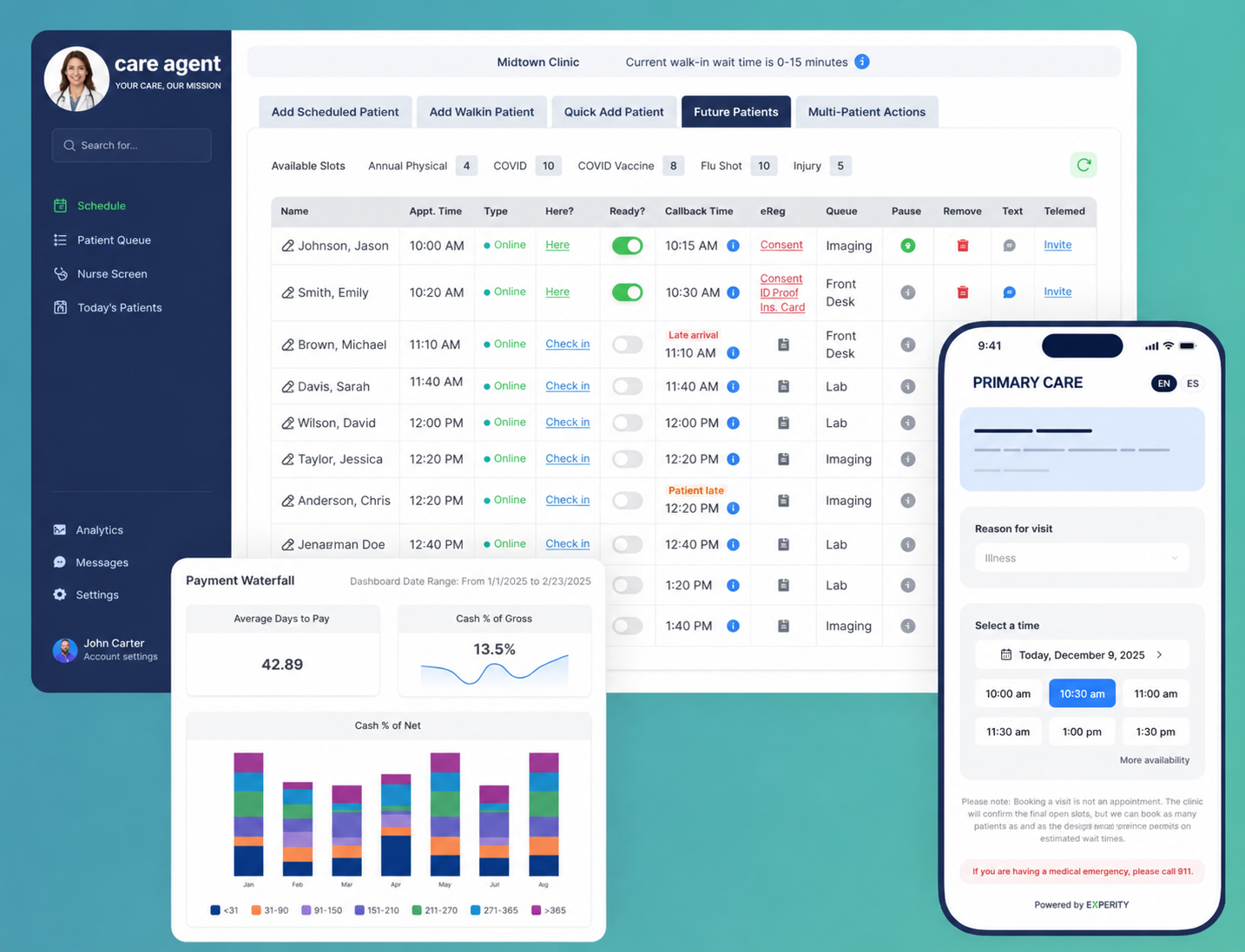
Selecting the right patient engagement software is vital for healthcare providers. It should align with the organization's specific needs and workflow.
Consideration of features and integration capabilities is crucial. Ensure the software supports seamless communication and integrates well with existing systems.
Pricing and scalability are also important. The solution should be affordable and able to grow with the organization.
When evaluating options, focus on:
- Compatibility with current systems
- Range of features offered
- Cost-effectiveness and scalability
The Future of Patient Engagement Software
The future of patient engagement software looks promising with ongoing technological advancements. These tools are expected to become more adaptive and intuitive.
AI and machine learning will play a bigger role in customizing patient experiences. Expect more predictive analytics to guide proactive care strategies.
Key developments to watch for include:
- Enhanced personalization through AI
- Greater integration with wearable technology
- Increased focus on remote monitoring capabilities
As digital healthcare evolves, patient engagement tools will become even more integral to delivering exceptional care.
Conclusion: Building a Patient-Centered Healthcare System
Patient engagement software is reshaping how care is delivered. It places patients at the heart of healthcare.
These tools improve communication and personalized care, leading to better patient experiences and outcomes. They also help create a more connected healthcare system.
Patient-focused solutions can improve health outcomes and make healthcare systems more efficient. Using this technology can help create a more accessible and sustainable healthcare system.
Request a Demo
See how you can use Care Agent to reduce staff burden, keep patients informed, and bring predictability to your operations